
The Project of the Press
From Somaraja Press to Parlêtre Press

I started Somaraja Press four years ago as a place to house my writings on Asian medicine, astrology, and more. My vision for the press is now expanding from a personal endeavor to a collective project, where the press becomes the locus for an assemblage of voices.
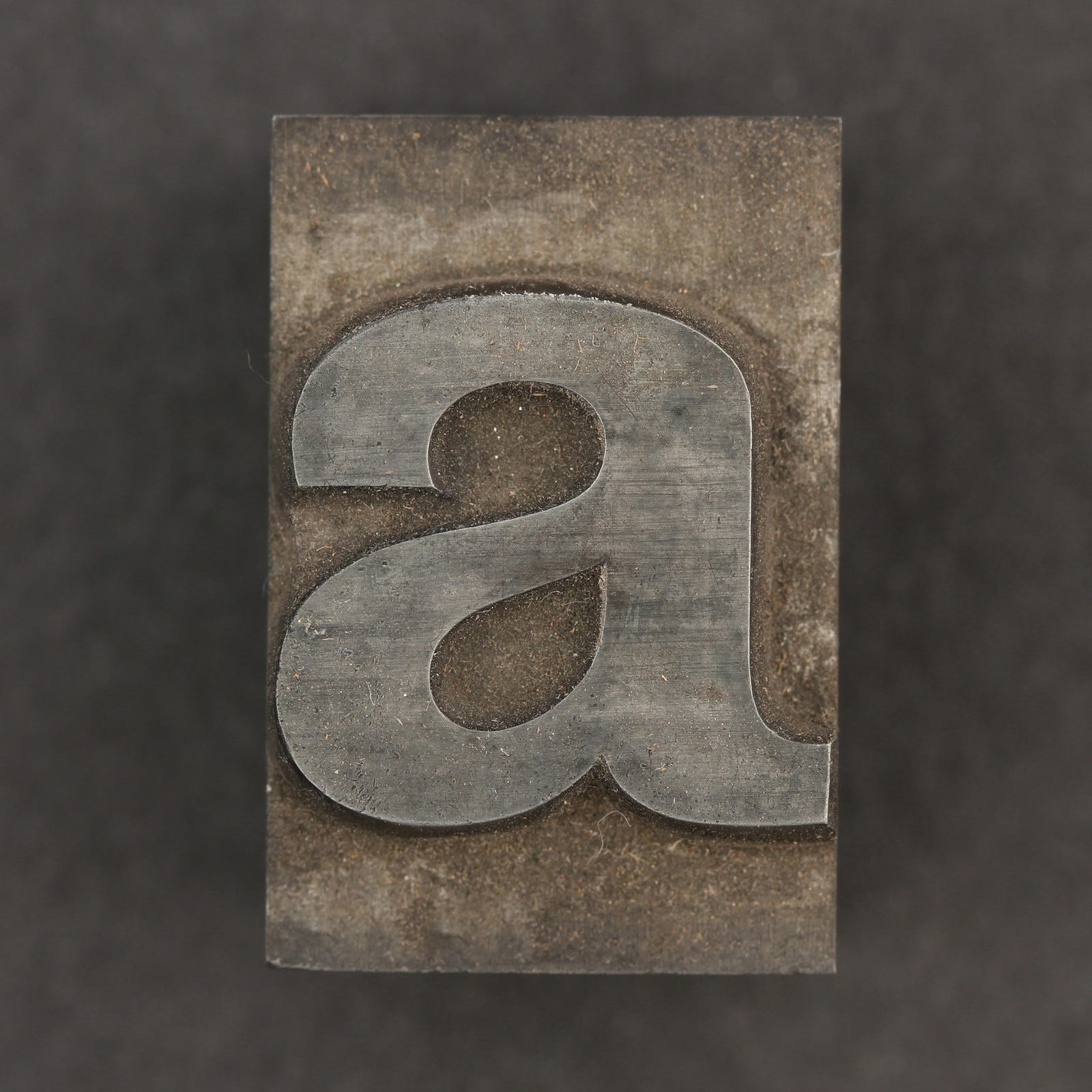
What is the function of the press? The word press originally referred to letterpress printing techniques from the mid-fifteenth century, where words were literally pressed onto the page. Gutenberg developed this approach from the centuries-old tradition of woodblock printing. A return to the press is therefore a revival of the word as a marking, of letters as palpable surfaces, and writing as a visible inscription of thought.
A shift in function is signaled by a change of name: from Somaraja Press to Parlêtre Press.
Parlêtre is a coinage from Jacques Lacan that combines parler (to speak) and être (to be) to connote “speaking being”. In other words, I speak, therefore I am. Parlêtre thus articulates the project of the press as a social link, where speaking beings inscribe a shared discourse through inspired writing.
This is not a transition from one subject to another but a movement that enlarges the frame of possibility—a context where psychoanalysis, medicine, and esoterica can be written and read.
Parlêtre Press is a place for writers who have grown weary of the elitism of big-house publishers and the editorial tyranny of academia. Parlêtre Press is where you can mark the page and print with your own style and symptom, à la lettre.
Ethics and Philosophy

Parlêtre Press is a niche publishing house for long-form essays and conversations at the frontier of the unconscious—where psychoanalysis and medicine weave aesthetic currents.
Parlêtre Press follows Freud in observing the unconscious as the linking factor across disciplines:
It is enough to say that psychoanalysis, in its character of the psychology of the deepest, unconscious mental acts, promises to become the link between psychiatry, medicine, anthropology, and literary history.”1
This understanding gives psychoanalysis a multidisciplinary privilege, by acceding its function to the field of the liberal arts. As Lacan says:
At the present time, psychoanalysis is perhaps the only discipline comparable to those liberal arts [of the Middle Ages], inasmuch as it preserves something of this proportional relation of man to himself—an internal relation, closed on itself, inexhaustible, cyclical, and implied pre-eminently in the use of speech.2
The ethic of the press is thus rooted in the traditional notion of the liberal arts—East and West, antiquity and modernity.
In ancient India, the liberal arts were conceived as the six limbs of the Veda (vedānga): phonetics, poetics, grammar, etymology, astrology, and ritual. This developed into a model of education that encompassed philosophy, medicine, grammar, logic, and the arts.
In medieval Europe, the liberal arts were comprised of seven disciplines divided into the trivium of the language arts (grammar, dialectic, rhetoric) and the quadrivium of mathematical arts (arithmetic, geometry, astronomy, music).
Parlêtre Press reinvigorates these intersections at the through line of the unconscious. Where do we situate the unconscious if not on an axis in time and space? Where is psychoanalysis as a phenomenon that sees the hidden proportion of man? What is the nexus of culture and thought?
Psychoanalysis developed in aesthetic step with surrealism. Parlêtre follows this beat into the thready pulse of transcendental realism, a new clinic of the real that finds its footsteps neither in the past nor the present but a future anterior already prophesied.
Transcendental realism is an assemblage of ecstasy, where desire flows in the jouissance of the speaking subject—where the real, the symbolic, and the imaginary translate to the real, the true, and the beautiful.
Submissions
Parlêtre Press welcomes exceptional writing that charts new territory in relation to the unconscious and the liberal arts. The press is a home for serious thinkers, pioneering clinicians, and independent scholars who desire to move beyond the closures of university discourse and into an open avant-garde of the written and spoken word. Here, the unconscious is the only thread linking the discourse of psychoanalysis with medicine and the esoteric anatomy of the real.
Essay submissions are welcome in the following fields:
Psychoanalysis—Freud, Lacan, and the wider analytic tradition
Medicine—Ayurveda, Tibetan Medicine, Chinese Medicine, and related modalities
Astrology—Eastern and Western traditions of astrology and divination
Vignettes—Case sketches, personal reflections, and dream fragments
Poetics—Poetry, short stories, and literary criticism
If you are interested in submitting your work for publication, please send a brief proposal and bio to neeshee.pandit@gmail.com.
Sigmund Freud, "Psycho-Analysis: Freudian School", In The Encyclopædia Britannica, 13th ed., 3:253–255 (London: The Encyclopædia Britannica Company Ltd., 1926).
Jacques Lacan, “The Neurotic’s Individual Myth,” trans. Martha Noel Evans, The Psychoanalytic Quarterly 48, no. 3 (1979): 414.